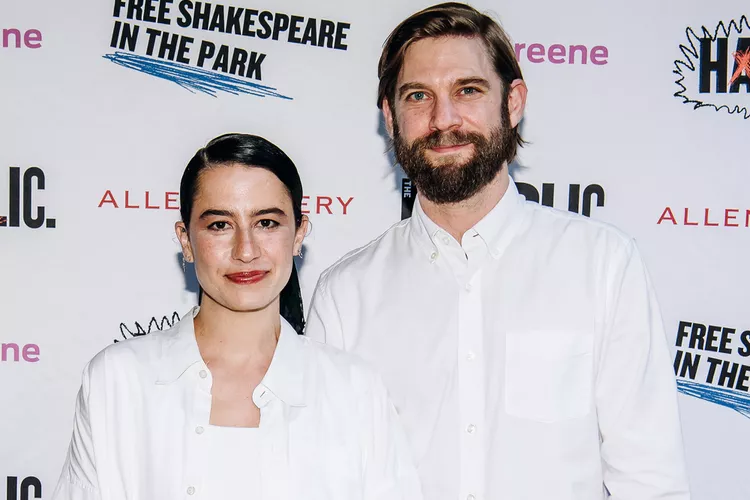
David Rooklin is an American scientist and biotechnology entrepreneur whose career combines biochemistry, computational biology, molecular modeling, and drug discovery. He is best known as a co-founder of Redesign Science, a biotechnology company founded in 2017 that applies physics-based molecular simulation and artificial intelligence to drug discovery. His work reflects a broader shift in pharmaceutical research toward using advanced computing to understand biological systems and identify potential therapeutic compounds.
Outside the scientific community, Rooklin has also attracted public interest because of his marriage to comedian, actor, and writer Ilana Glazer. Despite this connection to entertainment, his own professional identity is firmly rooted in science and biotechnology. Public information about him centers primarily on his education, scientific research, entrepreneurial work, and family life rather than celebrity.
Table of Contents
ToggleWho Is David Rooklin?
David Rooklin is a scientist, inventor, and entrepreneur working across biology, physics, chemistry, and computer science. His academic training includes biochemistry and computational biology, two disciplines that have become increasingly important in modern pharmaceutical research. An earlier professional biography described his work as focused on discovering therapeutics for emerging drug targets.
Rooklin’s professional path is notable because it connects academic research with commercial biotechnology. Rather than remaining exclusively in university research, he helped translate computational methods into a biotechnology business. His career has therefore involved scientific investigation, software and computational methodology, entrepreneurship, and the practical challenges of developing technologies that could contribute to pharmaceutical discovery.
David Rooklin’s Education and Scientific Foundation
Rooklin earned a bachelor’s degree in biochemistry from Oberlin College before pursuing doctoral study at New York University. He subsequently earned a Ph.D. in computational biology from NYU. These two areas of study provided complementary foundations: biochemistry concerns the chemical processes underlying living organisms, while computational biology uses mathematical and computational techniques to investigate complex biological questions.
His education placed him at the intersection of laboratory science and computing. Computational approaches are particularly valuable when researchers need to examine molecular structures and interactions that would be difficult or expensive to investigate solely through physical experiments. Rooklin eventually applied this interdisciplinary background to drug design, combining knowledge of molecular biology with computational techniques designed to study potential therapeutic targets.
His Years at New York University
New York University played an important role in Rooklin’s scientific development. NYU records identify him as a graduate student who completed his Ph.D. in 2012, and the Yingkai Zhang research group’s alumni page also lists him among former researchers associated with the group. His subsequent professional work continued to involve computational drug research.
During this period, Rooklin developed experience in areas including molecular modeling, software development, and drug design. His years in academic science allowed him to investigate fundamental questions about how molecules interact while also exploring how computational methods could have practical pharmaceutical applications. That transition from academic research toward commercialization eventually became central to his career.
David Rooklin and the Development of AlphaSpace
One of the important scientific projects associated with Rooklin is AlphaSpace. A professional biography describes him as the inventor of AlphaSpace, a computational approach developed to investigate “druggability” in new biological targets. In simple terms, druggability concerns whether a biological structure offers suitable opportunities for molecules to bind in ways that could potentially produce therapeutic effects.
This problem is particularly relevant for challenging protein targets. Traditional approaches may work well when a protein contains a clearly defined pocket where a small molecule can bind, but many biologically important targets do not present such obvious opportunities. Computational analysis can help researchers examine molecular surfaces and interactions in greater detail, potentially revealing opportunities that are difficult to recognize through simpler structural analysis.
The Beginning of Redesign Science
Rooklin’s academic research eventually contributed to an entrepreneurial venture. In the 2015–2016 NYU Stern Entrepreneurs Challenge, Redesign Science won the Technology Venture Competition’s $75,000 prize. NYU Stern described the venture as a biotechnology company focused on virtual molecular design for discovering and optimizing therapeutics targeting pathological protein-protein interactions. The team included Rooklin, Ashley Modell, and Joseph Katigbak.
Redesign Science was subsequently established as a biotechnology company in 2017. Company information describes it as working at the intersection of physics-based molecular simulation, deep learning, and drug discovery. This direction represented a natural progression from Rooklin’s earlier computational research: scientific methods developed in an academic setting could now be applied within a company focused on therapeutic discovery.
David Rooklin’s Role at Redesign Science
Public professional sources identify Rooklin as a co-founder and senior leader of Redesign Science. Sources differ slightly in describing his current title—some list him as CEO, while his LinkedIn profile describes him as co-founder and president—so the safest description is that he is a co-founder and senior executive at the company.
His responsibilities sit at the intersection of scientific research and entrepreneurship. Leading a biotechnology venture involves more than developing algorithms or performing molecular simulations. It can require building multidisciplinary teams, establishing pharmaceutical collaborations, securing resources, defining research priorities, and determining how promising computational discoveries should progress toward experimental testing.
How Redesign Science Approaches Drug Discovery
Redesign Science describes itself as a platform biotechnology company combining physics-based molecular simulations with deep learning and generative AI. Its research focuses on understanding proteins dynamically rather than treating biological structures only as fixed objects. The company’s technology is intended to help identify potential opportunities for developing small-molecule therapeutics.
NYU’s Technology Opportunities & Ventures describes the company’s NUVO platform as integrating physics simulation with generative AI. The underlying concept is that molecular simulations can provide information about biological behavior, while computational models can assist researchers in exploring possible chemical compounds. Such technologies do not eliminate laboratory experimentation; rather, they can help scientists prioritize hypotheses and molecules for further investigation.
Why Computational Biology Matters to His Career
Computational biology has become an important bridge between traditional biological research and modern computing. Researchers can use algorithms, simulations, statistical methods, and large datasets to study systems that may be too complicated to understand efficiently through experiments alone. Rooklin’s academic and entrepreneurial work demonstrates how these tools can be directed toward questions relevant to pharmaceutical development.
The value of this approach becomes clearer when considering the enormous chemical space researchers face when searching for new medicines. Scientists cannot physically test every conceivable molecule against every possible biological target. Computational methods can narrow the search, investigate molecular behavior, and identify candidates that warrant closer experimental examination. Rooklin’s work has developed within this broader transformation of biotechnology.
David Rooklin’s Experience Before Entrepreneurship
Before becoming known for Redesign Science, Rooklin accumulated experience across academic and pharmaceutical research. Public professional information reports that he worked as a research technician at the University of Colorado Boulder and later completed a research internship in Merck’s cardiovascular disease department. His work there involved gene-network analysis related to potential targets for cardiovascular conditions.
He subsequently spent an extended period at New York University, progressing through doctoral and postdoctoral research before moving further into biotechnology entrepreneurship. This background is important because Redesign Science did not emerge from an unrelated business idea. It grew from years of scientific training and research involving molecular modeling, computational biology, drug design, and software.
David Rooklin and Ilana Glazer
Rooklin’s personal life became more widely discussed because he is married to Ilana Glazer, known particularly for co-creating and starring in Broad City. According to People, Glazer and Rooklin first met in New York City’s Washington Square Park in 2012. Their relationship developed largely outside the intensive publicity often associated with entertainment-industry couples.
The couple married in February 2017. Their careers occupy notably different professional worlds: Glazer works primarily in comedy and entertainment, while Rooklin’s work revolves around science and biotechnology. Public interviews and profiles have occasionally highlighted this contrast, but the couple has generally maintained boundaries around the more private aspects of their relationship.
David Rooklin’s Family and Private Life
Rooklin and Glazer became parents in 2021 when they welcomed their first child, a daughter. They have deliberately kept significant information about their child private, including her name and face. This distinction is important when discussing Rooklin’s biography because reliable public information about his family is relatively limited.
Rooklin himself also maintains a lower public profile than his spouse. Most reliable information about him comes from scientific, university, biotechnology, and professional sources rather than extensive celebrity coverage. Some profiles have also noted his interest in drawing and sketches, showing a creative side alongside his technical career, although science remains the central theme of his public professional identity.
Scientific Entrepreneurship and Rooklin’s Career
Rooklin’s professional journey illustrates the relationship between academic discovery and biotechnology entrepreneurship. Scientific research can produce promising methods, but converting those methods into practical drug-development tools requires additional infrastructure, investment, software engineering, collaboration, and validation. Redesign Science represents an effort to make that transition from computational research to an operational discovery platform.
His background also demonstrates why biotechnology startups often combine expertise from several disciplines. Modern computational drug discovery may involve physicists, computational chemists, biologists, machine-learning researchers, software engineers, and medicinal chemists. A founder working in this environment therefore has to connect scientific questions with technological capabilities and the practical requirements of developing therapeutic programs.
David Rooklin’s Broader Significance in Biotechnology
Rooklin is part of a generation of researchers applying increased computing power and advanced algorithms to problems traditionally approached through experimental chemistry and biology. Redesign Science’s combination of molecular dynamics and generative AI reflects a larger biotechnology trend toward computationally assisted drug discovery. The ultimate effectiveness of individual drug programs still depends on rigorous experimental and clinical validation.
For that reason, Rooklin’s contribution is best understood without exaggerated claims about AI automatically creating medicines. Computational platforms can generate hypotheses, model molecular behavior, identify possible binding opportunities, and help prioritize compounds. Experimental researchers must then determine whether predictions hold up in laboratory and, much later, potentially clinical settings. Rooklin’s career occupies this increasingly important interface between computation and experimental therapeutic development.
The Future of David Rooklin’s Work
The future direction of Rooklin’s career is closely connected to developments in computational drug discovery. Improvements in molecular simulation, computing infrastructure, artificial intelligence, and biological datasets are expanding what researchers can examine digitally. Redesign Science’s focus on combining physical modeling with generative AI places its research within this rapidly developing scientific landscape.
However, future scientific or commercial outcomes cannot be predicted reliably from current information. Drug discovery is lengthy and uncertain, and computational predictions must ultimately survive experimental testing. What can be established is that Rooklin has built his career around the intersection of biology, molecular modeling, computing, and entrepreneurship—a combination likely to remain significant as pharmaceutical research becomes increasingly computational.
Conclusion
David Rooklin has built a career that connects scientific research with biotechnology entrepreneurship. His education in biochemistry and computational biology led to years of research at New York University, the development of computational approaches such as AlphaSpace, and ultimately the creation of Redesign Science. His professional story demonstrates how computational methods can move from university research toward real-world applications in pharmaceutical discovery.
Although his marriage to Ilana Glazer has brought him greater public visibility, Rooklin’s own career remains centered on science. His work reflects the growing convergence of biology, physics, computer science, molecular simulation, and AI in modern drug discovery. At the same time, the available evidence supports describing these technologies as tools for improving and accelerating research—not as substitutes for the laboratory and clinical validation required to turn scientific ideas into medicines.
FAQs
Who is David Rooklin?
David Rooklin is a scientist, computational biologist, biotechnology entrepreneur, and co-founder of Redesign Science. He is also known publicly as the husband of comedian and actor Ilana Glazer.
What does David Rooklin do for a living?
Rooklin works in biotechnology and computational drug discovery. His company, Redesign Science, uses approaches involving molecular simulation and artificial intelligence to support the discovery of potential therapeutics.
Where did David Rooklin study?
He earned a bachelor’s degree in biochemistry from Oberlin College and a Ph.D. in computational biology from New York University.
Who is David Rooklin married to?
David Rooklin is married to Ilana Glazer, the comedian, writer, and actor widely known for Broad City. They married in February 2017 and have a daughter.
What is Redesign Science?
Redesign Science is a biotechnology company founded in 2017 that combines physics-based molecular simulation with deep learning and generative AI for drug-discovery research.