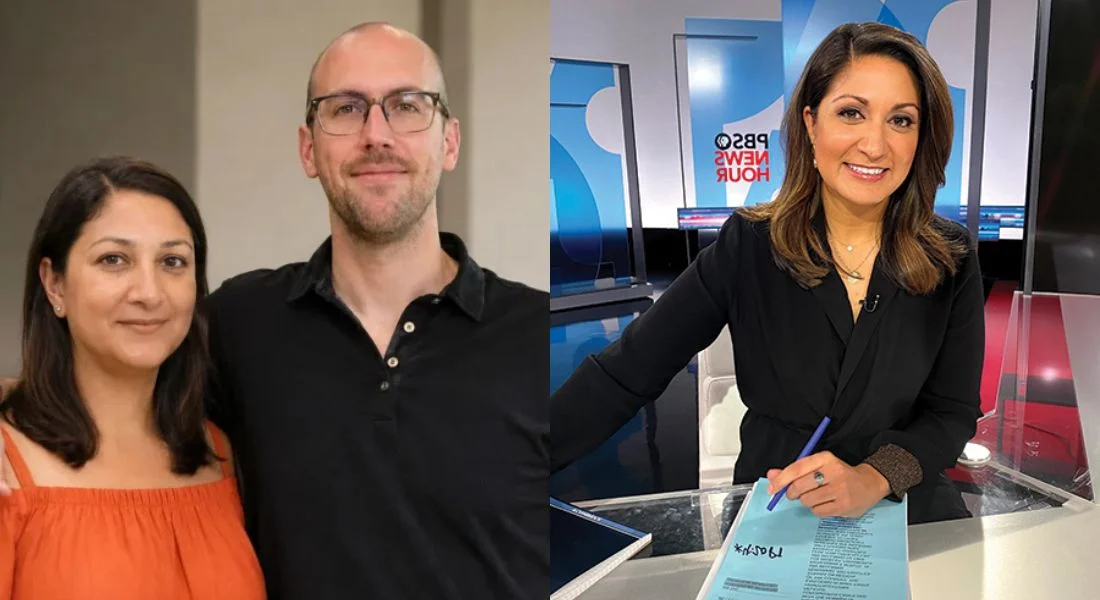
Paul Werdel is an American media professional whose career has developed largely behind the scenes of major journalism organizations. Although many people recognize his name because of his marriage to journalist Amna Nawaz, his professional background extends well beyond that public connection. Werdel has worked across broadcast journalism, editorial operations, and digital product development, giving him experience in several stages of the modern news business. His career is particularly interesting because it reflects the transition from traditional broadcasting toward digital-first journalism. Public information about his private life is relatively limited, which has contributed to curiosity about his background. Rather than seeking constant attention, Werdel has generally maintained a low public profile. His professional history includes work associated with BBC World News, Al Jazeera English, Talking Points Memo, and The New York Times.
Werdel’s story also illustrates how important behind-the-scenes professionals can be to journalism. Not every influential media professional appears in front of a camera or becomes a household name. Producers, editors, product managers, and newsroom strategists help determine how stories are researched, produced, distributed, and experienced by audiences. Werdel’s career has touched several of these areas, particularly during the period when smartphones and digital platforms were transforming news consumption. His professional journey therefore offers an interesting look at the changing media industry as well as the person himself. While some online biographies contain conflicting details about his age, education, and finances, those claims should be treated carefully when they are not supported by authoritative sources.
Who Is Paul Werdel?
Paul Werdel is best described as a journalist and digital media professional with experience in editorial leadership and product development. His career has involved both traditional newsroom responsibilities and the technology-focused work required to deliver news through modern platforms. Unlike television anchors and correspondents who regularly appear before audiences, Werdel has spent much of his professional life working behind the scenes. That distinction is important because his contributions are more closely connected to newsroom processes, editorial decisions, and digital experiences than to on-camera reporting. His public profile became more recognizable through his relationship with Amna Nawaz, a prominent journalist and PBS NewsHour anchor.
The available professional record suggests that Werdel developed a career based on adaptability. He moved between broadcast organizations, digital political media, and product-focused positions, following the broader transformation taking place throughout journalism. His experience allowed him to understand both the editorial side of news and the technological systems used to distribute it. That combination became increasingly valuable as newspapers and broadcasters began focusing on websites, mobile applications, audience behavior, and digital engagement. Werdel’s career is therefore more than a collection of employers; it represents a professional transition from conventional journalism toward the digital media environment that dominates modern news consumption.
Early Life and Background
Compared with his professional career, relatively little verified information is publicly available about Paul Werdel’s childhood and family background. Several online biographies describe him as being from Baltimore, Maryland, while also noting his connection to journalism education in the United States. However, details about his parents, childhood experiences, and early personal interests have not been extensively documented through authoritative sources. This limited public information appears consistent with Werdel’s overall preference for privacy. He has built a career in an industry where public exposure is common, yet he has generally avoided turning his personal life into a major part of his professional identity.
What can reasonably be understood from his career is that communication, journalism, and media technology became important parts of his professional development. His later movement between editorial and product positions suggests that he was interested not only in producing stories but also in understanding how audiences receive information. That broader perspective likely helped him adapt as news organizations moved increasingly toward digital platforms. It is important, however, to distinguish documented career information from assumptions about his childhood or personality. Because reliable public biographies do not provide extensive details about his early years, claims concerning specific family circumstances or childhood events should not be presented as established facts.
Education and Journalism Training
Paul Werdel is widely reported to have studied journalism at the University of Maryland. His educational background is significant because journalism programs traditionally combine writing, reporting, research, ethics, production, and media theory. Those skills can provide a foundation for working in a newsroom, particularly for someone who later moves between editorial and production responsibilities. Some biographies also describe early media-related responsibilities connected with the university, although the exact details of those positions are not consistently documented across public sources. For that reason, the broader picture of journalism education is more reliable than every specific claim made by secondary biography websites.
His later career demonstrates how formal journalism training can evolve into a much broader media skill set. Werdel did not remain limited to traditional reporting or writing roles. Instead, he became involved with production, editorial management, digital publishing, and product development. That progression reflects an important change in the journalism industry, where professionals increasingly need to understand both content and technology. A journalist working in a digital newsroom may need to think about audience behavior, mobile interfaces, publishing systems, and distribution in addition to traditional editorial standards. Werdel’s professional development appears to reflect this changing definition of media expertise.
Paul Werdel and BBC World News
One of the important early stages of Werdel’s career was his work with BBC World News. Public biographies place him at the BBC during the mid-2000s, where he worked in production and helped support international news programming. A 2007 Washington Post article also referred to Werdel as a producer and colleague working with BBC journalist Katty Kay. The article described the practical responsibilities involved in producing a broadcast, including monitoring news wires, arranging guests, and coordinating recorded material. This provides useful contemporary evidence of his involvement in the production side of international journalism.
Working in an international newsroom would have required strong organizational skills and the ability to operate under tight deadlines. News production is often a coordinated process involving reporters, producers, editors, technical teams, guests, and broadcasters. A producer can play a critical role in ensuring that the right material reaches the right people at the right time. Werdel’s BBC experience therefore appears to have provided valuable exposure to the fast-moving nature of global news. It also established a foundation for his later editorial responsibilities, where understanding the entire production process would become increasingly useful.
His Work at Al Jazeera English
After his experience with BBC World News, Werdel is widely reported to have worked at Al Jazeera English as a news editor. This represented another significant step because Al Jazeera English operates with an international audience and covers events from a global perspective. A news editor’s responsibilities can include reviewing stories, coordinating coverage, working with reporters, and helping determine how information should be presented. Such a position requires editorial judgment as well as the ability to make decisions quickly when news developments change.
The experience also fits the larger pattern of Werdel’s professional development. His career moved from production toward increasingly responsible editorial and strategic positions. International news organizations require professionals to work with people from different cultural and professional backgrounds while maintaining consistent editorial standards. This kind of environment can strengthen communication, organization, and decision-making skills. Werdel’s time at Al Jazeera English therefore appears to have helped prepare him for later work in digital media, where editorial judgment would have to be combined with new technologies and changing audience expectations.
Experience at Talking Points Memo
Werdel later worked with Talking Points Memo, commonly known as TPM, a digital political news organization. His association with TPM is important because it placed him within a digital-first media environment rather than a traditional television newsroom. Digital publications operate differently from broadcast outlets because stories can be updated continuously, audiences can interact with content immediately, and publishing decisions are closely connected to online traffic and engagement. Working in that environment would have given Werdel additional experience with the rapidly changing relationship between journalism and technology.
His work at TPM also helped connect his editorial background with the emerging digital media economy. Online journalism increasingly required professionals to understand not just what information should be published but how readers would discover and consume it. Editors had to consider speed, clarity, accuracy, audience interest, and the possibilities of digital distribution. Werdel’s transition through this type of organization demonstrates why his later movement into product leadership was a logical development. He had already gained experience with editorial content and was increasingly positioned to understand the systems that delivered that content to readers.
Career at The New York Times
One of the most notable chapters of Paul Werdel’s professional life was his work at The New York Times. Publicly available industry coverage places him there during a period when the organization was heavily investing in digital products and mobile journalism. His titles reportedly included Senior Editor for Platforms, Senior Product Manager for Mobile, and Product Director. These positions show a clear shift from conventional newsroom production toward technology and product strategy.
His work at The New York Times is particularly relevant because the early and mid-2010s represented a major turning point for digital journalism. Readers were increasingly accessing news through smartphones, apps, notifications, and mobile websites rather than relying primarily on print newspapers or desktop computers. Product teams therefore became essential to the future of journalism. Werdel’s role involved thinking about how readers experienced news through digital platforms, making his work part of a much larger transformation in the media industry. His career demonstrates how journalism professionals could apply editorial knowledge to product development and digital innovation.

Paul Werdel and Digital Media Innovation
Digital media innovation became one of the defining themes of Werdel’s professional journey. Traditional journalism is primarily concerned with gathering and presenting information, while digital product work adds another layer involving interfaces, technology, audience behavior, and distribution. A successful digital news product must make information accessible while preserving the editorial values that make journalism trustworthy. Werdel’s background across editorial and product roles gave him experience at the intersection of these two areas.
The importance of this work has increased as audiences have shifted toward mobile devices and personalized digital experiences. News organizations now have to think carefully about how stories appear on small screens, how readers navigate applications, and how breaking information reaches audiences through digital channels. Product leaders can influence these experiences without ever writing or presenting the actual news story. Werdel’s career is an example of this behind-the-scenes influence. His professional path shows that modern journalism depends not only on reporters and editors but also on people who understand technology, design, publishing systems, and audience needs.
Paul Werdel and Amna Nawaz
Paul Werdel is also widely known because of his marriage to Amna Nawaz, an accomplished American journalist and PBS NewsHour co-anchor. Public biographies report that the couple married in 2007 after dating for several years. Their relationship has attracted interest partly because both partners have professional connections to journalism and media. While Nawaz has become a highly visible television journalist, Werdel has generally maintained a quieter career away from the camera.
Their relationship is interesting because both have experienced demanding careers in the media industry. Journalism can involve irregular schedules, travel, deadlines, and intense public attention, making balance an important issue for families working in the field. Public reporting indicates that Werdel and Nawaz have built their family life while managing these professional demands. However, they have generally avoided excessive public exposure concerning their private lives. This makes it appropriate to focus on the publicly documented aspects of their relationship rather than speculate about personal matters they have chosen not to disclose.
Family Life and Parenting
Paul Werdel and Amna Nawaz are reported to have two daughters. Although the family is occasionally visible through public appearances or social-media posts, Werdel has generally kept family matters away from the center of public attention. This approach is notable because the spouse of a prominent television journalist can easily become a public-interest subject. Instead, the available information suggests that Werdel has maintained a relatively private lifestyle and allowed Nawaz’s professional work to remain the more visible part of their public profile.
Some reports have described Werdel as taking on a significant caregiving role within the family, particularly as Nawaz’s career became increasingly demanding. This has led to wider discussion about how couples divide professional and family responsibilities. Rather than viewing family caregiving as separate from professional achievement, Werdel’s story can be seen as an example of how modern families may organize responsibilities around changing career opportunities. Because specific details of their household arrangements are private, however, it is better to avoid presenting every online claim as a confirmed fact.
Why Paul Werdel Maintains a Low Public Profile
Paul Werdel’s relatively private public image is one of the most distinctive aspects of his biography. Unlike many media professionals, he has not built his reputation around frequent interviews, social-media exposure, or personal publicity. His career has primarily focused on the work taking place inside newsrooms and digital organizations. This may help explain why many people know his name through his connection to Amna Nawaz before discovering his own professional history.
A low public profile does not necessarily mean a lack of professional influence. In modern media, many important decisions are made by people who rarely appear on television or become recognizable to the general public. Product managers, editors, producers, and newsroom strategists can shape how millions of people receive information without becoming celebrities themselves. Werdel’s career is a useful example of this phenomenon. His story demonstrates that influence in journalism can come through systems, leadership, production, and innovation rather than through personal visibility.
Paul Werdel’s Career Legacy and Professional Impact
Werdel’s professional legacy can be understood through the different stages of his career. His early production work connected him with international broadcasting, while his later editorial roles expanded his understanding of news management. His experience in digital political media then exposed him to the online publishing environment, and his work at The New York Times brought him into digital product leadership. Together, these experiences form a career that mirrors the broader evolution of journalism from broadcast-centered operations toward digital ecosystems.
His career is especially relevant for people interested in the future of journalism because it demonstrates the value of combining editorial knowledge with technological understanding. Modern media organizations need professionals who can understand both the importance of accurate journalism and the mechanics of delivering information through digital platforms. Werdel’s professional path shows how someone with a journalism background can move into product development and digital strategy. That combination of skills has become increasingly important as news organizations compete for readers across websites, mobile applications, social platforms, and other digital channels.
Paul Werdel Today and His Public Image
Information about Werdel’s current professional activities is limited compared with the extensive public coverage available about his wife. Several recent biographies suggest that he stepped back from full-time media work around the late 2010s and became more involved in family responsibilities. However, because his current employment status is not consistently documented by authoritative sources, it is safer to describe his present professional situation as private rather than make a definitive claim about his occupation.
His public image remains connected to two major themes: his substantial background in journalism and his marriage to Amna Nawaz. People searching for information about him often encounter questions about his age, net worth, education, family, and career. Some of these topics have been addressed by online biography websites, but not all of their claims are independently verified. In particular, exact financial figures and birth-year estimates should not be treated as confirmed unless supported by reliable documentation. The most dependable picture is that of a media professional with a significant background in journalism and digital product work who has chosen to keep much of his personal life private.
Conclusion
Paul Werdel’s life and career provide an interesting example of a media professional whose influence has largely existed away from the spotlight. While his marriage to Amna Nawaz has made his name familiar to many readers, his own career includes meaningful experience in international broadcasting, editorial work, digital journalism, and product development. His time with organizations such as BBC World News, Al Jazeera English, Talking Points Memo, and The New York Times reflects the rapid evolution of the news industry.
Perhaps the most notable feature of Werdel’s story is the way his professional journey combines journalism with technology and family responsibilities. He demonstrates how a media career does not have to depend on appearing on television or maintaining a highly visible public persona. His work behind the scenes has been connected to important changes in how news is produced and consumed. At the same time, his preference for privacy has allowed him to maintain a distinction between his professional history and personal life. For anyone researching Paul Werdel, the most accurate picture is of a seasoned media professional, digital journalism specialist, husband, and father who has made a meaningful career while largely staying outside the public spotlight.
FAQs
Who is Paul Werdel?
Paul Werdel is an American journalist and digital media professional with experience in international broadcasting, editorial work, and digital product leadership.
He is also publicly known as the husband of journalist Amna Nawaz.
What organizations has Paul Werdel worked for?
His career has been associated with organizations including BBC World News, Al Jazeera English, Talking Points Memo, and The New York Times.
His roles have included production, editorial responsibilities, and digital product leadership.
Is Paul Werdel married to Amna Nawaz?
Yes, Paul Werdel and Amna Nawaz married in 2007 and have two daughters together.
The couple has generally maintained a relatively private family life despite their professional connections to journalism.
What did Paul Werdel do at The New York Times?
Werdel held digital-focused positions at The New York Times, including roles connected with platforms, mobile products, and product leadership.
His work came during a major period of transformation in how readers consumed news on smartphones and digital devices.
What is Paul Werdel’s net worth?
There is no reliably verified public figure for Paul Werdel’s net worth.
Online estimates vary, so specific amounts should be considered speculation rather than confirmed financial information.